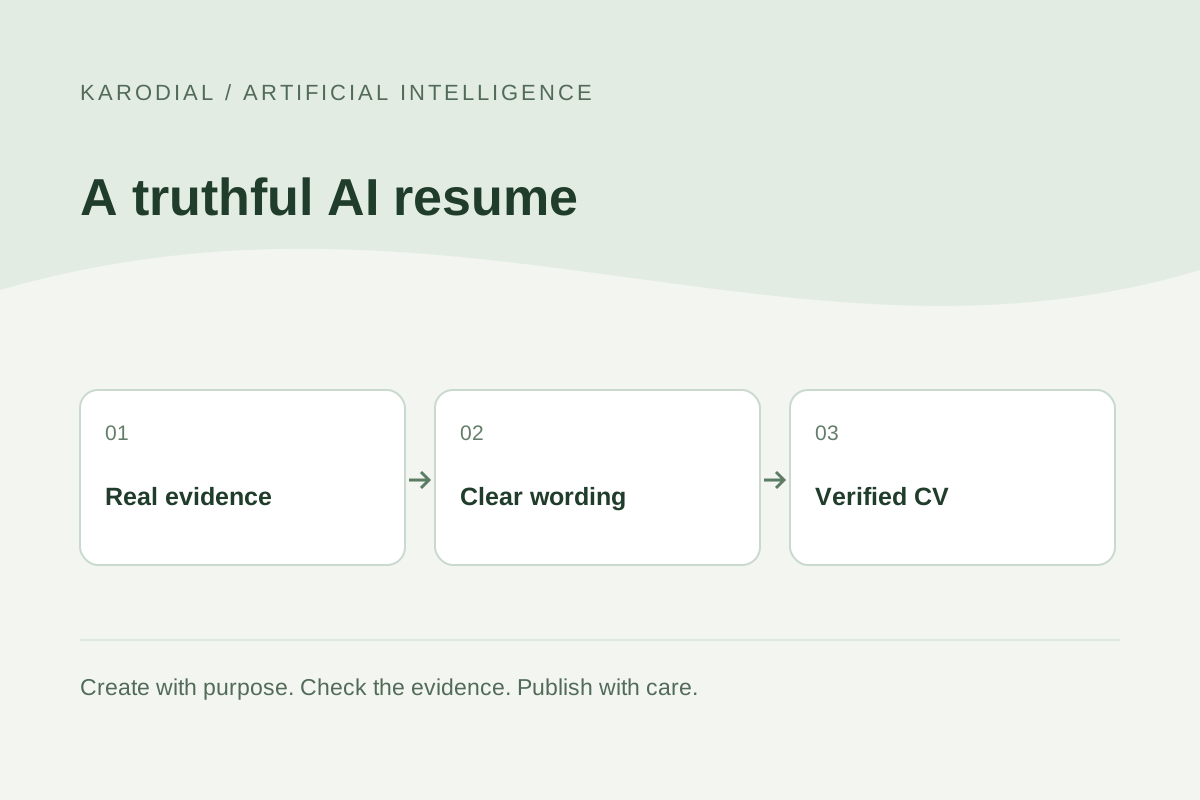
AI can help turn scattered career notes into a readable resume. It can suggest structure, shorten sentences and identify information a recruiter might need. It should not create the experience the document is supposed to describe. A convincing line becomes a liability when you cannot explain it in an interview. The useful workflow begins with evidence, uses AI for organization and ends with your own verification. This guide follows a fictional junior website assistant who wants to present real project work clearly, without claiming responsibilities or results that belong to somebody else.
Build an evidence file before prompting
Collect actual roles, dates, education, projects and skills. For each experience, write what you personally did, which tools you used and what you can demonstrate. Distinguish paid work, volunteering, coursework and personal practice. All can provide relevant evidence, but they should not be presented as the same type of experience.
Keep supporting material privately organized: approved portfolio links, a project brief, a certificate or a record of your contribution. You do not need to attach every item to the resume. The purpose is to make accurate writing possible. For the fictional website assistant, useful notes might include checking mobile pages, correcting content and testing a contact form. Those are meaningful activities without turning the person into the lead developer of the entire website.
Give AI a bounded editing task
A weak request says, make me look impressive. A stronger request asks: using only the facts below, draft a concise experience section for a junior website role; do not add qualifications, employers, dates, numbers or responsibilities; mark missing evidence as a question. Then provide your verified notes. This gives the system an editing task instead of inviting invention.
Ask for alternative wording when a sentence is unclear, not alternative facts. If the model adds a sales percentage or management responsibility, remove it unless you can substantiate it. A polished tone does not make a claim true. Keep the original notes beside the draft and compare each proposed line with its source. This simple habit makes errors visible before the document becomes a confident but inaccurate account of your career.
Describe your contribution at the right level
Use verbs that match the work. Assisted with mobile testing, maintained service-page content and implemented a reviewed contact form describe different contributions. Avoid replacing every verb with led or transformed. A team project should identify your part rather than imply ownership of everybody's work. If a senior colleague designed the architecture, do not absorb that responsibility into your own description.
Explain context where it helps: the type of site, the task and the verified outcome. For example, the assistant could say that they checked responsive pages and recorded defects for developer review. That is clearer than claiming revolutionary digital transformation. If the work was a practice project, label it as such and link to a permitted demonstration. Honest specificity can make a junior profile stronger because an interviewer can understand and discuss it.
Use numbers only when you can support them
AI frequently supplies impressive-looking metrics when asked to improve a resume. Do not accept them as harmless decoration. A claim about revenue, response time or conversion needs a reliable measurement and a fair description of your role. Before using a number, ask what was measured, over which period and how the result relates to your contribution.
Not every accomplishment needs a percentage. You can describe completing a defined task, correcting a documented problem or delivering an accepted project. If the only evidence is that the form passed its acceptance test, say that rather than inventing an increase in sales. Avoid converting a team-wide result into a personal achievement without context. A smaller accurate claim is easier to defend than an ambitious statement based on a guessed baseline.
Tailor the document without changing your history
Read the job description and identify the relevant skills and responsibilities. Match them to evidence you genuinely have. A resume for a content maintenance role may emphasize editing, accessibility checks and reliable updates. A junior development role may need more detail about code, testing and collaboration. Reordering genuine experience is useful; inventing missing expertise is not.
Use the employer's terminology only when it accurately describes your work. Do not copy an entire list of requirements into a skills section. If you are learning a tool, identify the level and demonstrate a small relevant project where appropriate. AI can suggest which facts deserve prominence and which sentences repeat the same idea. You remain responsible for deciding whether the resulting profile fairly represents your capability.
Make the layout readable and portable
Use a clear heading hierarchy, consistent dates and readable text. Keep contact information correct and portfolio links functional. Follow the employer's requested file type and application instructions. A complicated visual layout may look attractive but become difficult to read or extract. Inspect the actual exported document, including page breaks and whether important text remains selectable.
Europass provides an official example of organizing education, work experience and skills into a CV, but one format is not mandatory for every employer or country. Select a structure appropriate to the role. Avoid claims that a particular template guarantees passing an applicant tracking system. Systems and recruitment processes vary. A useful check is whether a person can quickly understand your experience and whether the submitted file preserves the information you intended to communicate.
Protect private information and follow instructions
Remove unnecessary personal identifiers before uploading notes to an AI service. Do not include somebody else's confidential client records or internal documents merely to strengthen a bullet point. Use permitted summaries and approved public portfolio links. Review the service's data handling and the employer's relevant instructions rather than assuming every tool is appropriate for every application.
If an assessment or application sets limits on AI assistance, follow those limits. Keep separate responsibility for a resume draft, a skills test and a live interview. Preparation can include practicing how to explain your genuine work. It should not involve secretly outsourcing an assessment that requires your independent performance. A truthful document and a consistent explanation create a much stronger foundation than a polished profile that collapses under the first follow-up question.
Run a final claim-by-claim review
Read each sentence and ask whether you can explain it, demonstrate it and identify your own contribution. Check names, dates, qualifications, tool levels and links. Have a trusted reviewer look for unclear wording rather than embellish the facts. Prepare short interview examples connected to the main claims so your spoken account and written resume agree.
For the fictional website assistant, the final document highlights actual content work, mobile testing and one reviewed implementation. It labels practice projects clearly and avoids unsupported business metrics. AI has improved organization and language, while the evidence remains the candidate's own. That is the useful balance: use assistance to make real capability understandable, then submit only a version you can confidently and honestly stand behind.