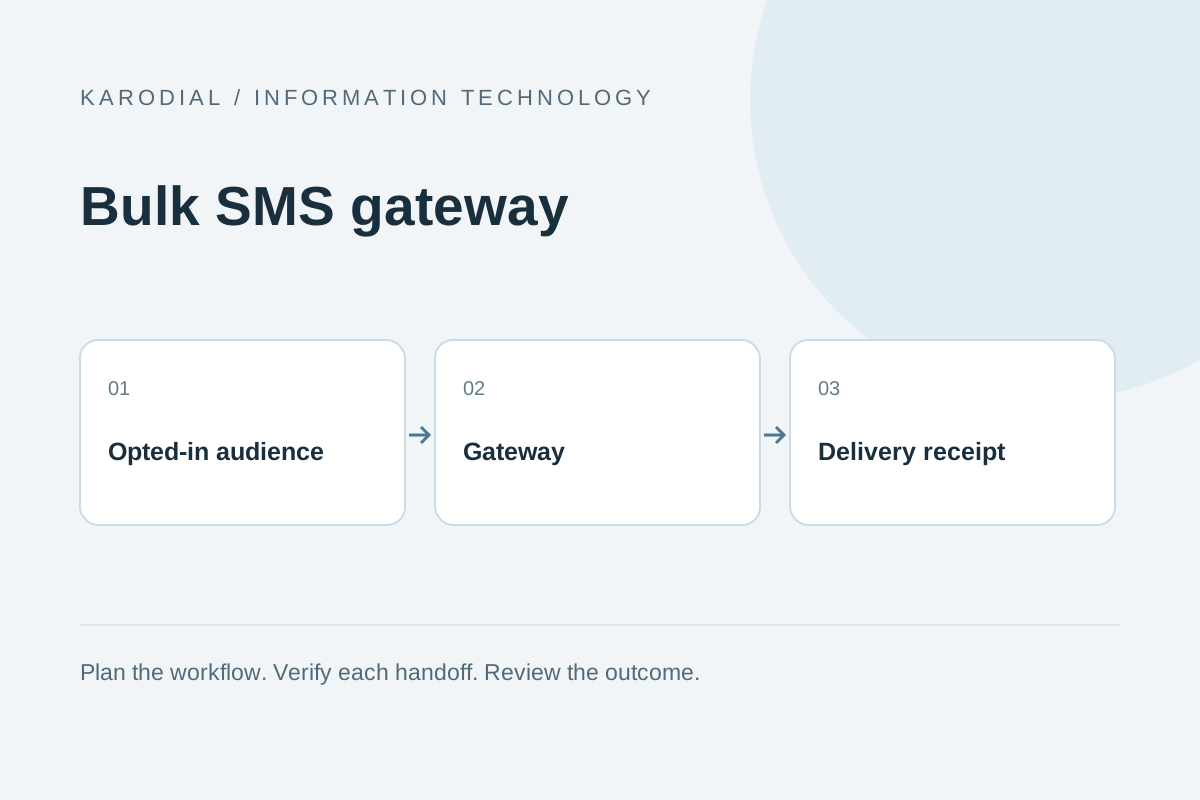
A bulk SMS gateway connects a business application to messaging infrastructure so it can send many individual messages through a controlled process. Typical uses include expected reminders, order updates and permission-based campaigns. The gateway is one part of the workflow. You still need an appropriate audience, clear sender identity, useful content and a reliable way to interpret delivery results. Sending more messages is not the same as communicating better. This guide explains the decisions that turn a list of phone numbers into an organized, reviewable messaging operation.
Separate message purposes
Start by defining why each message is being sent. A requested account verification, an appointment reminder and a promotional offer have different customer expectations. Keep these purposes distinct in your data, templates and reporting. Do not hide marketing language inside an essential notification to avoid reviewing the appropriate sending requirements. A clear purpose also helps the team write shorter, more useful messages.
Decide what action the recipient should take. A reminder may need no response, while a support message may require a monitored reply path. Avoid sending a message merely because the contact exists in your CRM. Confirm whether the person expects that type of communication. Record the relevant source and preference so later campaigns do not depend on a staff member remembering a conversation from months earlier.
Build a usable audience record
Normalize phone numbers with the relevant country context and validate the format before scheduling a batch. Formatting checks do not prove that a number is active, belongs to a particular person or can receive the message. Keep those distinctions visible. Remove duplicates deliberately, especially when the same customer appears in several imported lists. Avoid sending repeated copies because two teams uploaded overlapping contacts.
Store the audience selection and exclusion rules for each campaign. Apply current opt-outs and suppression records again at dispatch, not only when the list was first prepared. A customer may change their preference between planning and sending. Restrict access to audience exports and collect only information needed for the workflow. Buying a large list does not establish permission, relevance or a good chance of useful engagement.
Review sender and destination requirements
Sender types, registration, message categories and supported routes differ by country and provider. Verify the current requirements for your actual destinations before launch. Do not assume that a sender identity approved for one market works everywhere. In some destinations, business registration or template review may be part of onboarding. The provider should explain the applicable process and operational constraints.
For India-focused sending, review current official commercial communication guidance and the provider's supported registration process rather than relying on a generic online checklist. Have the appropriate team review your intended use and audience permission. Avoid making broad claims that a gateway automatically makes every campaign compliant. The business remains responsible for its messages, contact practices and the rules applicable to the situation.
Write for segments and real screens
SMS messages have encoding and segmentation rules. Characters outside a basic encoding set can change how many characters fit in a segment, and longer messages may be split. Exact billing and delivery behavior depend on the provider and route. Hindi messages therefore deserve a separate preview and segment check rather than an assumption that an English cost estimate will remain unchanged.
Make the sender and purpose clear. Put the useful information early, use recognizable links and avoid unnecessary abbreviations. Preview the final message after variables are inserted; a long customer name can change its length. Check the destination of every link and provide an appropriate support path. A concise message should still make sense without asking the recipient to guess which business sent it or what action is expected.
Integrate through a controlled server
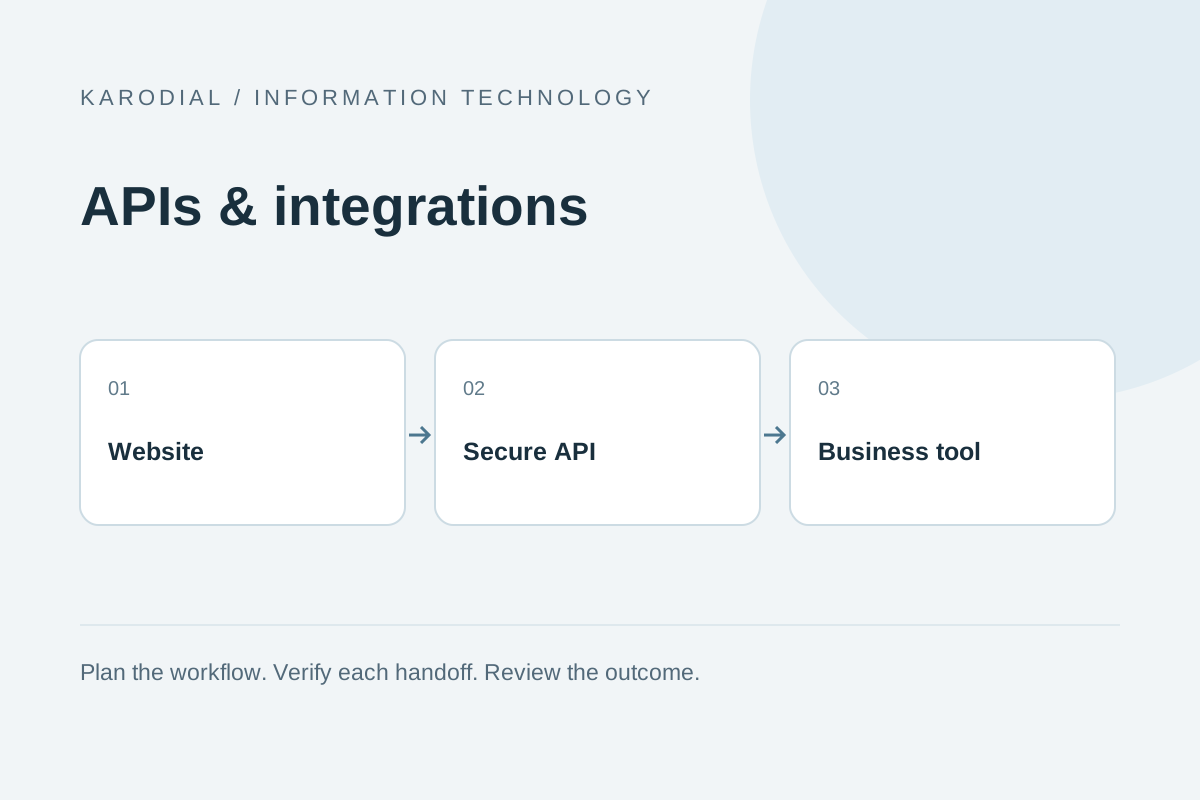
Use a server-side API connection and keep credentials out of browser code and exported spreadsheets. Validate the campaign, recipients and template variables before dispatch. Save a local operation identifier and the provider's accepted message identifier. Track each recipient separately when individual outcomes matter. A single campaign status cannot accurately describe a batch containing accepted, failed and unresolved messages.
Protect dispatch against repeated requests. A browser timeout or double click should not automatically create another full send. Use the provider's idempotency support where available and maintain durable local records. Set spending and volume controls appropriate to the business. A campaign preview should show audience count, exclusions, estimated segments and the assumptions behind an estimate before the responsible person approves the actual send.
Schedule with limits and stop conditions
Plan batches around audience expectations, time zones, provider constraints and applicable sending requirements. Avoid assuming that local server time matches every recipient's location. Respect opt-outs and review the appropriate contact windows. Use bounded concurrency and queue processing instead of submitting an unlimited list at once. Large batches deserve a staged rollout.
Define stop conditions before starting. Unexpected rejection rates, broken links, invalid credentials or a faulty template should pause further dispatch for review. A gateway accepting requests faster is not useful if the underlying campaign is wrong. Keep an operator able to stop unsent work. Cancellation of a local queue and cancellation of messages already accepted by a provider may have different effects, so communicate those boundaries clearly.
Read delivery evidence accurately
An API acceptance response usually proves only what its contract states. It may mean the provider accepted the message for processing. Delivery receipts can supply later information, but their availability and meaning vary by route. Validate incoming callbacks and correlate them with the saved provider message ID. Process repeated receipts safely and preserve relevant timestamps.
Do not label an unknown outcome as delivered simply because no error appeared. Likewise, a lack of immediate evidence does not automatically prove failure. A message delivered to a device is not proof that the intended person read or acted on it. Present these distinctions in reports. Employees make better decisions when the dashboard explains what the system actually knows instead of compressing uncertainty into an optimistic green label.
Manage failures and customer responses
Classify failures so the next action is appropriate. A bad number needs data correction, a rejected template needs content or onboarding review and temporary service unavailability may justify a controlled retry. Re-sending every failure can waste money and annoy recipients. Preserve uncertain accepted operations for supported reconciliation rather than blindly submitting another copy.
Make opt-out handling and replies part of the working process. Where replies are supported, route them to a monitored destination and define response ownership. Do not advertise a reply option on a route that cannot receive replies. Keep suppression changes consistent across connected systems. Test the complete customer journey with approved test numbers before sending to a real audience, including links, reply behavior and the way a contact preference is updated.
Measure value beyond send volume
For a fictional service company, a reminder campaign might be judged by timely confirmations and fewer missed appointments, not merely messages submitted. Compare the relevant outcome with the full cost, including message segments, unsuccessful attempts, integration and staff time. Use honest attribution when a customer may have acted through another channel. Avoid presenting every later purchase as caused by the SMS.
Start with a small, expected audience and review actual results. Keep campaign copies, selection rules, approvals and delivery evidence organized. Set a retention policy and restrict unnecessary exports. Revisit sender setup and provider changes periodically. A dependable bulk SMS workflow combines relevant communication, careful audience handling and accurate evidence. The gateway enables delivery infrastructure; the business process determines whether the message was useful and whether the team can explain what happened.