A customer-support voice bot can answer a narrow set of questions, collect relevant details and connect a caller with the right employee. The value comes from reducing effort while preserving access to useful help. A natural voice alone cannot supply correct account information or resolve every complaint. For a business planning a website and support workflow with KARODIAL, the first question is what callers actually need. This guide describes a practical voice-bot project, including the decisions behind a reliable conversation and the evidence needed to judge its result.
Choose a bounded support task
Review common calls and choose a small, repeatable problem. Opening hours, service coverage and an existing appointment's basic status may be suitable starting points when information is maintained and access is appropriate. A complex dispute or a decision with serious personal consequences needs a different level of human responsibility. Avoid giving the bot a vague instruction to solve everything.
Define successful outcomes and clear boundaries. The bot might answer an approved question, save a callback request or transfer a caller. These are different results. Document which questions it cannot answer and what it should say instead. A specific scope makes both knowledge preparation and evaluation more realistic.
Understand the technical responsibilities
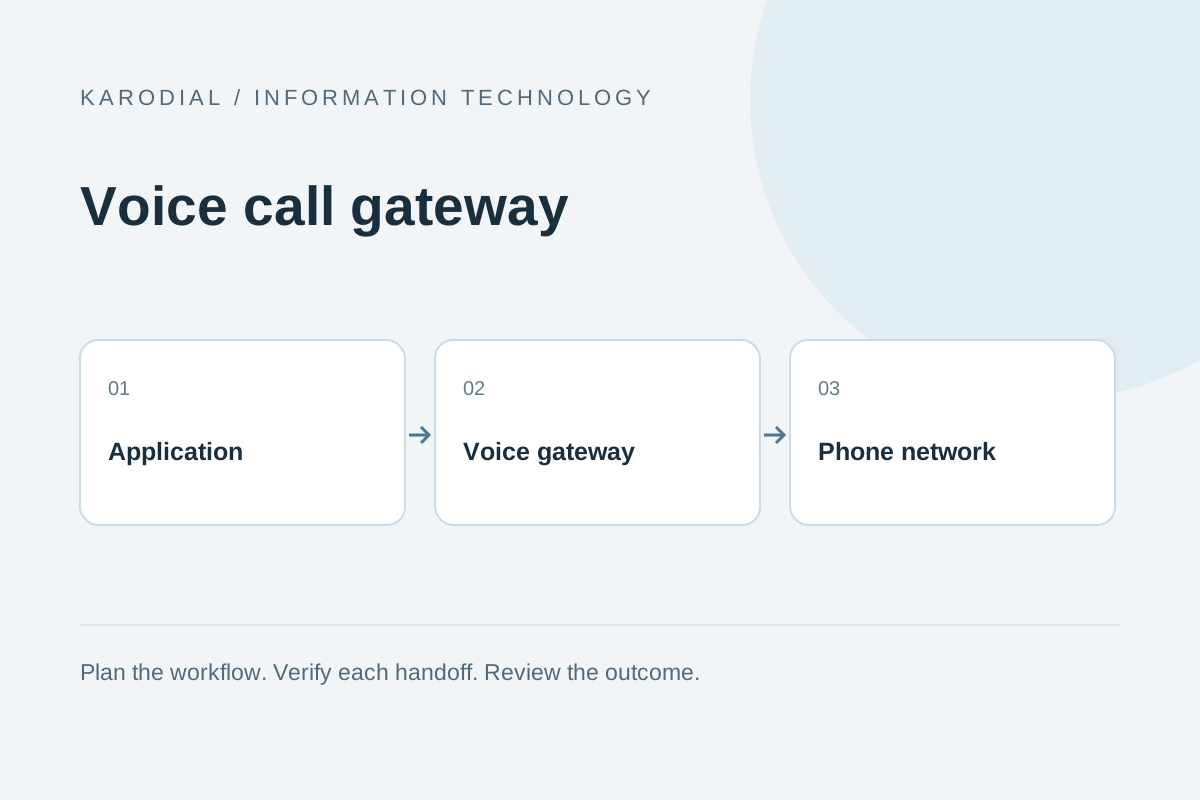
A phone-based bot needs a telephony connection, conversational processing and an application workflow. Some systems combine speech recognition, a language model and speech synthesis, while others use integrated audio models. Current agent platforms such as ElevenLabs describe knowledge, tools, telephony integration and evaluation as separate capabilities. Check the actual supported product rather than assuming every demonstration represents every plan.
Keep the gateway's call status distinct from the support outcome. A call can connect and end normally without resolving the question. The application should record whether information was provided, an action was verified or a human follow-up is needed. This distinction prevents operational reports from treating every completed connection as a satisfied customer.
Prepare maintained answers
Create a concise knowledge source from approved business information. Resolve contradictory policies and assign an owner for updates. Include service descriptions, operating hours, support boundaries and the correct route for unresolved issues. Do not fill gaps with plausible language. If the information is unavailable, the bot should acknowledge that and offer the agreed next step.
Write answers for listening. Long policy paragraphs are hard to follow over a phone. Break explanations into short steps and confirm whether the caller needs more detail. Keep source versions and review dates. When a service changes, update the knowledge before customers begin receiving the old answer in a confident voice.
Identify the interaction honestly
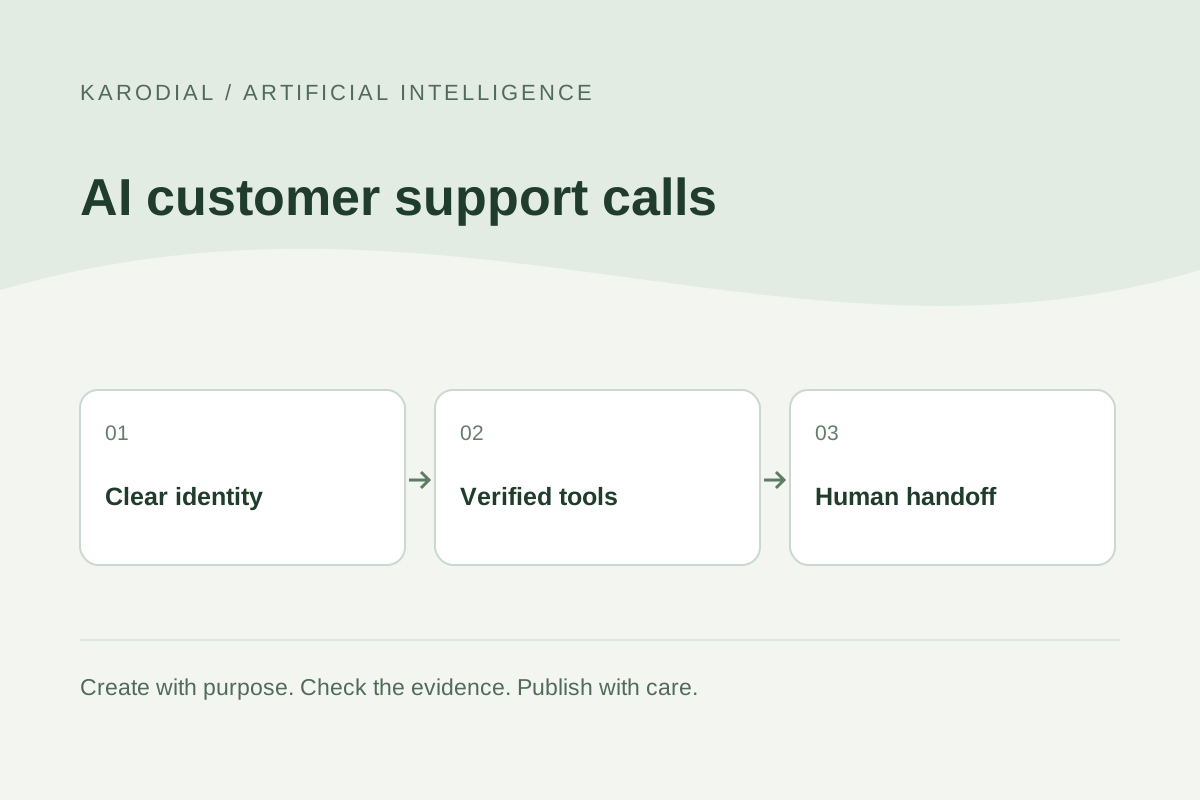
Introduce the business and make the automated nature of the conversation clear. Offer a useful way to reach a person. Do not design the voice to impersonate a particular employee without the required authorization. Caller expectations should reflect what the system can actually do, including working hours and transfer availability.
Review current provider rules and applicable requirements for the specific call and recording setup. Inbound support and outbound campaigns are different workflows. Do not assume that setting up an incoming help line authorizes promotional outbound calls. The business should maintain the appropriate permissions, notices and contact preferences across channels.
Protect private account information
Public opening hours and private account details require different access rules. Establish an appropriate verification process before revealing protected information. A recognized voice or a caller stating an email address is not automatically sufficient authentication. Keep the scope proportional to the information and action involved.
Collect only the details needed for support. Avoid asking callers to speak passwords, one-time codes or full payment details into an ordinary recorded conversation. Restrict access to transcripts and recordings, set a suitable retention process and review the chosen processor's current data terms. Do not assume deleting a visible conversation removes every related technical record or legal retention obligation.
Use tools with server-side controls
If the bot reads an appointment or requests a change, use narrowly permitted tools. The server must verify identity, record ownership and valid arguments. A prompt telling the model to be careful is not an access-control system. Read-only tools and state-changing actions should have appropriately different permissions and confirmation rules.
Announce success only after the authoritative system confirms the intended operation. If a scheduling request fails, the bot must not say the appointment has changed. Keep a correlation identifier and useful audit evidence. Protect against repeated tool calls creating duplicate requests. Where a result is uncertain, save it for review instead of inventing an outcome to finish the conversation.
Make human handoff work
Define the triggers for transfer: a request for a person, repeated misunderstanding, an unresolved complaint or a topic outside scope. Test the actual route and staffing schedule. A transfer button in a dashboard is not proof that a caller will reach an available employee. Plan for busy lines and after-hours requests.
Provide a concise summary when appropriate and permitted, including what the caller asked and what has already been attempted. Do not require the customer to repeat unnecessary steps. If an immediate transfer is unavailable, create an honest callback request and explain the expected process. Avoid promising an exact response time that the support team has not committed to meet.
Test both language and conversation
Use invented account records and controlled test callers. Cover ordinary questions, noise, accents, short answers, interruptions and language switching. Test Hindi and English independently, including names, dates and commonly mixed business words. A fluent greeting does not establish that the whole conversation remains accurate.
Simulate a failed tool, missing record and unavailable human handoff. Check the actual saved result against what the bot said. Listen to complete calls rather than only reading transcripts. Measure delay, clarity and whether the bot lets the caller finish. Repeated requests to restate information can make a technically successful system exhausting to use.
Pilot, measure and improve
Imagine a fictional repair business starting with service-area questions and callback capture. Its approved knowledge contains the actual coverage boundary. A caller outside that area receives an accurate explanation, while a complex complaint goes to an employee. The website provides a clear support link and alternative contact route. This illustrates coordination with a KARODIAL site, not a promise of an included voice-agent product.
Start with a limited pilot and review verified resolution, successful transfers, incorrect answers and staff correction time. Include telephony, processing and human follow-up in the cost assessment. Pause unsafe or misleading behavior instead of averaging it into an attractive score. A useful voice bot makes support easier while keeping information accurate, actions controlled and responsibility visible.