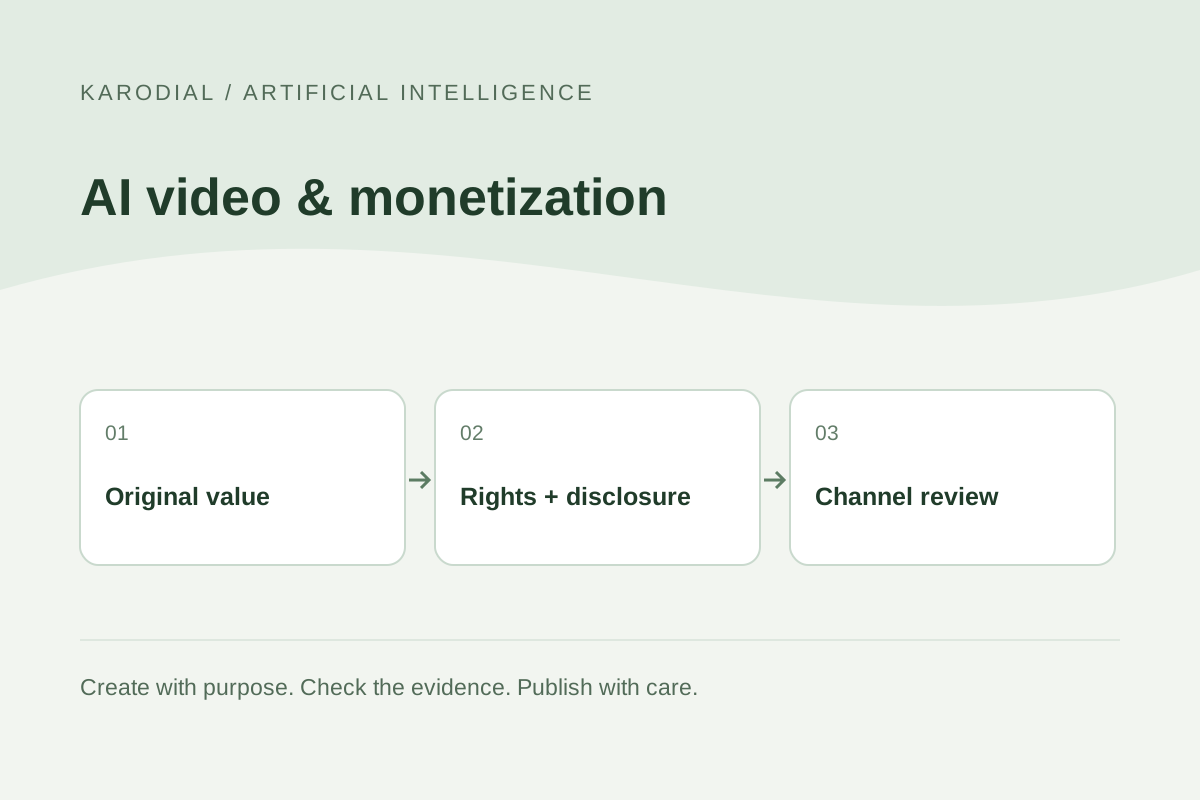
AI assistance does not turn a video into an automatic source of revenue, and the presence of AI does not answer every monetization question. A useful assessment asks how the video was made, what original value it offers, which rights are available and whether the channel satisfies the current platform requirements. These are separate questions. A creator can pass one check and fail another. This guide explains a careful review process for a small creator or business, using the official pages checked on 29 October 2026 rather than promising approval, a particular income or a shortcut around review.
Separate four decisions
Start with four columns in your planning sheet: permission to use the assets, required transparency, channel eligibility and the quality of the finished work. A licence may address the first column while saying nothing about the others. Likewise, reaching an audience threshold does not establish ownership of a soundtrack. Keeping the questions separate prevents one positive result from becoming an unsupported conclusion about the whole channel.
Imagine a fictional local-business channel making short explanations about websites. It uses an owned script, an authorized voice and original diagrams. Those choices provide useful production evidence, but the channel still needs to meet the applicable program requirements. Its audience may also be too small for the desired feature. Planning should recognize those facts without describing the work as a failure or assuming future revenue.
Understand the current originality standard
YouTube reviews the substance and contribution of the channel. Its policy distinguishes materially varied, useful work from repetitive templates and lightly changed reused material. Permission alone does not resolve reused-content review. Current examples also address misleading synthetic narratives and AI personas posing as human experts on sensitive subjects. Consult the official policy for the complete criteria.
Turn that into a practical question: what does this episode contribute that is specific to its subject? An original comparison, checked demonstration or coherent story can answer that question. Merely replacing a few nouns in a script cannot explain the contribution. Ask a reviewer unfamiliar with your production process to describe the difference between three episodes. If they appear interchangeable, improve their substance before producing more.
Apply disclosure independently
Review realistic synthetic scenes and meaningful alterations against the current disclosure guidance. YouTube's upload setting is currently called AI use under Attributes. Its guidance says disclosure alone does not affect earning eligibility. That does not make disclosure a substitute for rights or originality, nor does it make an otherwise misleading claim acceptable.
Create a disclosure note while editing rather than trying to remember every change at upload time. Identify which depictions are factual footage, conceptual illustrations or generated representations. In our business example, a fictional interface should not masquerade as an actual test result. A realistic disaster or a real person apparently making an invented statement requires different consideration from a simple animated flow diagram. Review the actual video as a whole.
Check the program and the feature
YouTube Partner Program participation involves eligibility conditions and review. Different monetization features can have different availability and requirements. Read the current official eligibility page and the channel's Earn area. Do not assume a screenshot from another creator's account describes your own status. Country, account setup, policy history and the relevant feature can affect the process.
Record the date of your check and the specific feature you are considering. Avoid building a business budget on an unapproved application. A channel can remain a useful education or brand project while its monetization position is unresolved. If the platform requests updated terms in the future, distinguish the announced effective date from the rules already operating today. A dated note is more accurate than labeling every announcement as an immediate change.
Review one complete episode
Take a finished draft and watch it as a viewer would. Does it answer the title's question? Are the visuals relevant to the narration? Can you distinguish a hypothetical scenario from a claim about reality? Check that editing has created a coherent argument rather than a sequence of surprising clips. A polished opening does not compensate for unsupported information later in the video.
For the fictional website channel, use invented enquiry records and explain why saving a form submission differs from notifying an employee. Show the relevant steps clearly. Do not invent an efficiency percentage to make the ending more exciting. Keep source notes close to important claims. This review produces a better video regardless of the eventual monetization decision, because it centers the viewer's actual understanding.
Inspect the channel rather than one favorite upload
Lay out several episodes together. Compare their scripts, narratives, examples and visual structure. A recognizable series can have consistent branding while each installment investigates a different question. If almost everything is recycled, a new thumbnail does not create a new editorial contribution. Review descriptions and titles as carefully as the media itself.
Check older uploads before applying, particularly if the channel previously relied on compilations or automated templates. Make a deliberate improvement plan rather than assuming one strong recent video solves every issue. Keep a record of what you changed and why. Do not remove or alter material merely to hide a rights problem; identify the underlying issue and use the appropriate platform process when a dispute or restriction exists.
Keep production and rights evidence
Save your script drafts, research notes, project files, licensed assets and approved voice inputs. An asset ledger should show the source, permitted use and any important limitations. Record the applicable model and plan when AI output rights depend on them. Owning a subscription does not automatically clear an uploaded reference image or a recognizable person's likeness.
Use the records to explain your own contribution and resolve ordinary production questions. They are not a guarantee that a platform or court will reach a particular decision. In a client project, agree on who manages the channel and who is responsible for licences and corrections. A website portfolio can link to reviewed work, but it should not imply that a sample video's performance predicts every client's result.
Measure without turning estimates into promises
Track useful signals such as whether viewers understand the topic, where they leave and which questions remain unanswered. Compare editing time, asset costs and the effort spent correcting errors. Treat revenue, when it exists, as an observed result with context. Avoid calculating a guaranteed income from a fixed number of views or presenting another channel's screenshot as your expected outcome.
Before paying for more tools, test a small production cycle. Can you research, write, produce and review one original episode at an affordable cost? Does the next subject deserve its own video? A manageable process is more valuable than an ambitious publishing quota that forces repetitive output. Document what you learned and change one part of the workflow at a time so improvements can be understood.
Make a reviewable publishing decision
Before upload, confirm the script, rights ledger, disclosure assessment, captions and metadata. Check the current official pages again when policy is central to the project. Keep platform approval separate from your own quality review. Neither attractive AI imagery nor a disclosure label guarantees monetization. The decision belongs to YouTube's applicable program and review process.
A sensible goal is to make work whose origin, value and permissions you can explain. In the example channel, that means original questions, accurate diagrams, reviewed narration and honest descriptions. If a review is unsuccessful, examine the actual reason and supported appeal or improvement options. Do not immediately buy a promise that someone can guarantee approval. Build a stronger, clearer channel and maintain evidence of the work behind it.